
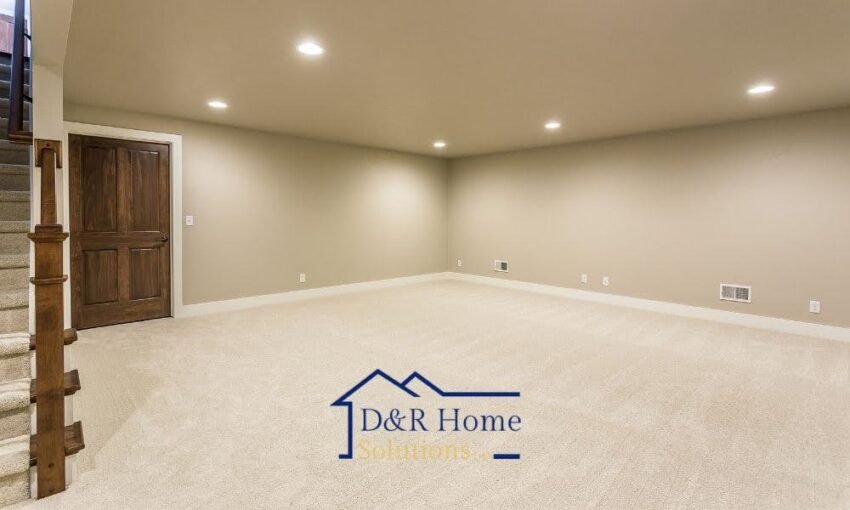

Basement remodeling is one of the highest-ROI home improvement projects available to Pennsylvania homeowners. The National Association of Realtors estimates a finished basement returns 70% to 75% of its cost at resale. But that return depends entirely on the quality of planning and execution.
Mistakes made during basement finishing are often hidden behind drywall and flooring, making them expensive to diagnose and correct later. Phoenixville sits along the Schuylkill River, and many homes in the borough have basements with moisture conditions that require specific treatment before any finish work begins. Getting this wrong costs far more than getting it right the first time.
Skipping Moisture Assessment Before Any Finish Work
The single most damaging mistake in basement remodeling is finishing over an untreated moisture problem. Basement walls experience hydrostatic pressure from groundwater pushing against the foundation exterior. This pressure forces moisture through concrete at a rate that standard paint or vapor barrier alone cannot stop. The result is mold growth behind drywall, often within 12 to 18 months of project completion.
The correct sequence starts with a moisture assessment. This includes checking for efflorescence on walls, testing relative humidity levels, and inspecting floor drains and sump pump function. ASTM E1745 standards define vapor retarder classifications for below-grade applications. A Class A or Class B vapor retarder, rated at 0.1 perms or less, is required for habitable basement space under IRC Section R406. Skipping this step is the leading cause of failed basement finishes.
Choosing the Wrong Flooring for Below-Grade Conditions
Solid hardwood flooring is not suitable for basements. Wood expands and contracts with humidity changes, and below-grade spaces have higher relative humidity than above-grade floors. The NWFA (National Wood Flooring Association) explicitly states that solid hardwood should not be installed below grade. Despite this, it remains one of the most common material mistakes contractors and homeowners make.
Appropriate flooring options for below-grade spaces include:
- Luxury vinyl plank (LVP): 100% waterproof, stable across humidity ranges
- Engineered hardwood: More dimensionally stable than solid, but still requires humidity control below 60% RH
- Ceramic or porcelain tile: Fully moisture-resistant, requires proper substrate preparation
- Epoxy-coated concrete: Durable, seamless, eliminates subfloor entirely
Flooring installed without a thermal break between concrete and the finish material also creates condensation on the floor surface in summer months when warm air meets the cold slab.
Ignoring Ceiling Height and Mechanical Clearances
Many basements in Phoenixville’s older homes have ceiling heights of 7 feet or less. Installing a dropped ceiling or drywall ceiling without accounting for duct, pipe, and beam clearances results in finished ceiling heights below 7 feet, which violates IRC Section R305.1 minimum habitable space requirements.
Mechanical systems including HVAC ducts, water supply lines, drain pipes, and electrical panels must remain accessible. A common mistake is drywalling over a cleanout access or covering an electrical panel without a proper access door. This requires tearing out finished ceilings or walls to restore code compliance. Mapping all mechanical locations before framing begins prevents this entirely. A detailed floor plan, produced during the planning phase, identifies every obstruction before a single stud is set.
Improper Egress Planning for Bedrooms
If the basement remodeling plan includes a bedroom, egress window installation is not optional. IRC Section R310 requires emergency escape and rescue openings in every sleeping room. The minimum net clear opening is 5.7 square feet, with a minimum width of 20 inches and minimum height of 24 inches. The sill height cannot exceed 44 inches from the finished floor.
Many homeowners add a bedroom to a finished basement without installing a compliant egress window. This makes the room unpermitted and uninsurable as a bedroom. It also creates a life safety hazard. Egress window installation in a poured concrete or block foundation wall costs $2,500 to $5,000 but is required by code and protects both occupants and property value. A licensed contractor pulls the permit and schedules the inspection to confirm compliance.
Undersizing Electrical for the Finished Space
A finished basement adds habitable square footage that requires dedicated electrical circuits. A common mistake is tapping into existing circuits rather than running new ones from the panel. This causes tripped breakers and creates overload conditions that violate NEC (National Electrical Code) Article 210 branch circuit requirements.
A finished basement with a home theater, bathroom, and home office typically requires:
- At least one 20-amp general-purpose circuit per 400 square feet
- A dedicated 20-amp circuit for any bathroom
- A dedicated circuit for any home theater receiver or projector
- AFCI protection on all bedroom and living area circuits per NEC 210.12
Homeowners who skip a sub-panel addition when the main panel has limited capacity create long-term electrical hazards. An electrician who reviews the existing panel load before rough-in prevents this.
Framing Directly Against Foundation Walls
Framing stud walls flush against concrete or block foundation walls traps moisture between the wall and the framing. This creates ideal conditions for mold growth on wood framing, particularly in Chester County’s humid summers where outdoor dew points regularly exceed 65°F between June and August.
The correct method is to leave a minimum 1-inch air gap between the foundation wall and the stud wall, or to use closed-cell spray polyurethane foam (SPF) applied directly to the foundation wall before framing. Closed-cell SPF has a vapor permeance of less than 1 perm at 2 inches thickness, meeting Class II vapor retarder requirements per ASTM E96. This eliminates the moisture trap while adding R-12 to R-14 insulation value per 2-inch application.
Skipping Permits and Professional Oversight
Unpermitted basement finishing is one of the most common and costly mistakes homeowners make. Chester County and Phoenixville Borough require permits for any basement work involving framing, electrical, plumbing, or HVAC. Work done without permits cannot be inspected, and deficiencies remain hidden until a home sale triggers a code compliance review.
The Pennsylvania Attorney General’s Bureau of Consumer Protection advises homeowners to verify contractor licensing and permit compliance before work begins. Unpermitted work discovered during a real estate transaction requires correction at the seller’s expense, often under time pressure that drives up contractor costs. At D&R Home Solutions, we handle permit coordination, inspection scheduling, and trade sequencing on every basement remodeling project. If you are ready to finish your basement the right way, call us at (215) 280-5910 or check our services to get started.