

Lynnwood, WA
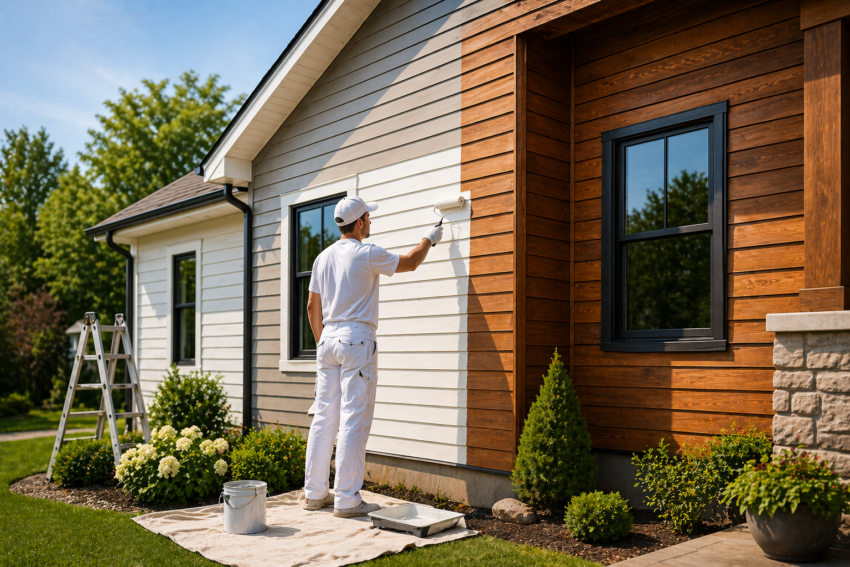
Exterior painting in Lynnwood, WA has become a more technically demanding and time-sensitive project than most homeowners anticipate when they first notice peeling or fading paint on their home’s exterior surfaces. The Pacific Northwest climate, with its extended periods of rainfall, persistent humidity, and temperature fluctuation, creates conditions that shorten paint lifecycles significantly compared to drier regions of the country. What should last eight to ten years on a properly prepared surface in a dry climate may begin failing in four to six years on a Lynnwood home where moisture exposure is constant and preparation shortcuts are common. Understanding what drives exterior paint failure in this region and what qualified exterior painting looks like is increasingly relevant for homeowners trying to protect both curb appeal and the structural integrity of their siding and trim.
Exterior Painting in Lynnwood, WA Requires a Climate-Specific Approach
Western Washington presents a combination of conditions that challenge exterior coatings more than most contractors acknowledge in their initial proposals. Annual rainfall exceeding 37 inches, relative humidity that frequently remains above 70 percent during the fall and winter months, and extended overcast periods that limit drying time between rain events all affect how exterior paint adheres, cures, and performs over its service life.
The most common cause of premature exterior paint failure in the Lynnwood market is moisture vapor transmission from inside the wall assembly pushing outward through the siding substrate. When interior humidity levels are higher than exterior levels, which is typical in occupied Pacific Northwest homes during the heating season, moisture vapor moves toward the exterior and can accumulate beneath the paint film if the substrate is not properly prepared and the coating system is not selected for vapor permeability. The result is blistering, peeling, and adhesion failure that appears to be a paint problem but is actually a building science problem that no amount of repainting will permanently resolve without addressing the underlying vapor dynamic.
According to the Paint Quality Institute, a research organization affiliated with the coatings industry, proper surface preparation accounts for approximately 80 percent of a paint job’s ultimate performance and longevity. In high-moisture environments like western Washington, that figure likely understates the importance of prep relative to product selection.
Why Surface Preparation Determines Whether Exterior Paint Lasts
Surface preparation for exterior painting on a Lynnwood home involves several sequential steps that cannot be compressed or skipped without directly affecting how long the finished coating will last. The process begins with a thorough pressure wash to remove surface contaminants including mold, mildew, algae, and accumulated dirt. Western Washington homes develop biological growth on exterior surfaces faster than homes in drier climates, and any organic material left on the surface before painting creates a barrier between the substrate and the primer coat that prevents proper adhesion.
After washing and allowing adequate drying time, all failing paint must be removed down to a stable surface. Painting over peeling or chalking paint transfers the adhesion failure of the existing coating to the new paint layer, producing a new finish that peels at the same rate as the old one. Sanding or scraping to a feathered edge at all failure boundaries is required to create a uniform surface profile for the primer coat.
Caulk replacement at all joints, trim intersections, and penetrations is one of the most functionally important preparation steps. Failed caulk allows water to enter behind the siding surface and migrate along the substrate, which causes paint failure and eventual substrate damage well beyond the visible caulk joint. Exterior caulk in high-moisture environments should be a paintable siliconized acrylic product rated for exterior use. Silicone-only caulk, while more water-resistant, does not accept paint and is not appropriate for surfaces that will be coated.
Priming follows surface preparation and serves two functions in exterior painting systems. It seals the substrate to prevent moisture absorption, and it provides a chemically compatible bonding layer for the topcoat. Bare wood and previously unpainted surfaces require a dedicated wood primer. Tannin-rich species such as cedar and redwood, which are common in Pacific Northwest siding materials, require a stain-blocking primer to prevent bleed-through that discolors the topcoat.
What Distinguishes a Qualified Exterior Painting Company from a General Painter
An exterior painting company operating in the Lynnwood market should demonstrate specific knowledge of coating products rated for high-humidity environments, surface preparation requirements for the Pacific Northwest climate, and the application conditions that affect how exterior coatings cure and perform.
Application temperature and humidity at the time of painting directly affect the curing process. Most exterior acrylic latex paints require surface temperatures above 50 degrees Fahrenheit and below 90 degrees Fahrenheit during application and for a period of hours after application. In Lynnwood, where temperatures drop sharply in fall and spring evenings, projects that begin on a warm afternoon can experience curing problems if the temperature falls below the minimum threshold before the paint film has fully set.
Exterior painting company lynnwood professionals who understand these constraints schedule work around forecast windows, avoid application during rain or when rain is expected within 24 hours, and select products with extended open times that accommodate the region’s slower drying conditions.
Paint product selection matters as much as application technique in the Pacific Northwest. Acrylic latex formulations with mildewcide additives are the standard specification for exterior use in western Washington because they resist the biological growth that the climate encourages. Products with 100 percent acrylic binder content outperform vinyl-acrylic blends in flexibility and adhesion, which is important on substrates that expand and contract with moisture cycling. Sheen level selection also affects performance: flat sheens absorb moisture and are generally not recommended for Pacific Northwest siding surfaces, while satin and eggshell finishes provide better moisture resistance while minimizing surface irregularities.
The True Cost of Deferring Exterior Painting Maintenance
Homeowners who defer exterior painting in Lynnwood past the point where the existing coating has failed are not saving money on painting. They are transferring cost from a painting project to a more expensive combination of substrate repair and painting. Once water penetrates behind failing paint and reaches the siding material, damage progresses independently of what happens on the surface. Hardboard siding absorbs moisture and begins to swell and delaminate. Wood trim rots at joints and end grain. Sheathing behind the siding layer wicks moisture and begins to deteriorate.
The transition from a painting project to a repair-and-paint project typically doubles or triples the total cost. The transition from a repair-and-paint project to a siding replacement project multiplies cost further. Maintaining a sound exterior coating before substrate damage begins is the most cost-effective maintenance strategy available to Lynnwood homeowners.
Premier Siding and Exteriors Brings Preparation-First Standards to Exterior Painting in Lynnwood
Premier Siding and Exteriors applies a documented preparation sequence to every exterior painting project, beginning with a surface condition assessment that identifies substrate damage, caulk failure, and biological growth before a project scope is written. The firm selects coating products rated for Pacific Northwest climate conditions and schedules work within application temperature and humidity windows appropriate for the selected products.
Exterior painting companies in Lynnwood that combine proper surface diagnostics, climate-appropriate product specification, and disciplined application scheduling deliver results that hold up through western Washington winters rather than failing within the first one or two wet seasons.
What Homeowners Should Confirm Before Hiring an Exterior Painting Contractor
Before signing a contract for exterior painting, homeowners should ask specifically what surface preparation is included in the bid, whether caulk replacement is line-itemed separately or bundled into a general labor figure, what specific paint products will be used by brand and product line, and what the minimum application temperature policy is for the project.
Washington State requires all residential contractors performing exterior painting work to carry an active license through the Department of Labor and Industries. Homeowners can verify license status, insurance coverage, and any filed complaints through the L and I contractor lookup portal before committing to any agreement.
For information about exterior painting services in the Lynnwood area, contact a licensed exterior contractor directly.
Contact: Premier Siding and Exteriors Lynnwood, WA