
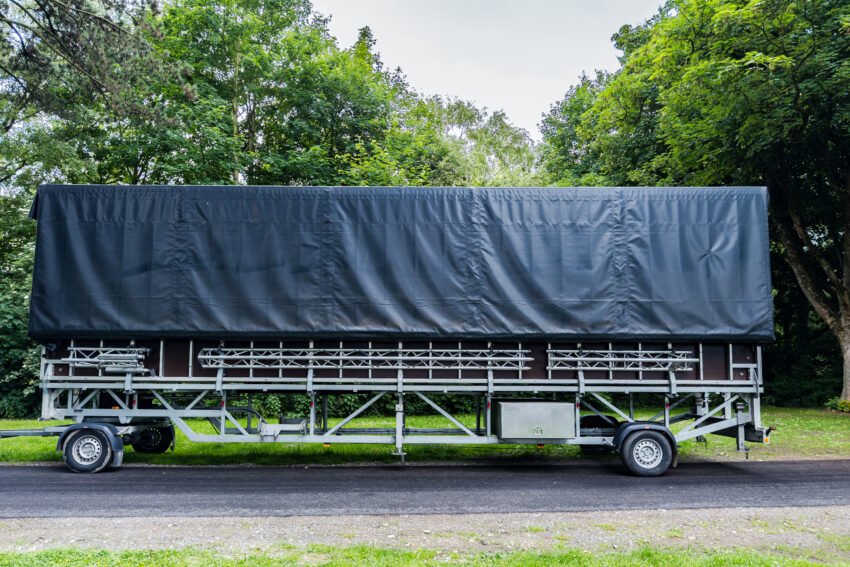

We have all seen that guy on the side of the interstate. He is pulled over on the shoulder, wind whipping his jacket around, desperately trying to bungee-cord a shredded, flapping piece of canvas over his load. It is a miserable situation, and it usually happens because someone bought the cheapest cover they could find without thinking about how they actually use their rig.
Outfitting your truck or fleet is a massive investment. If you just open a catalog and point to the lowest price tag, you are going to pay for it later in ripped fabric, bent hardware, and blown-out shoulders.
A heavy-duty trailer tarp system is not just a cosmetic accessory to keep the DOT off your back. It is a functional piece of operating equipment that dictates your turnaround times, your fuel economy, and the safety of your drivers.
Before you drop thousands of dollars on a new setup, you need to sit down and audit exactly how your truck operates. Here are four blunt questions you need to ask yourself to ensure you buy the exact system your operation actually needs.
1. What Exactly Am I Dropping Into This Trailer?
The biggest mistake owner-operators make is buying the wrong fabric for their specific freight. A tarp is not a one-size-fits-all product. You have to match the material to the absolute worst thing you plan on hauling.
- Hauling Scrap or Demolition? You cannot use a solid vinyl cover. A jagged piece of rebar or a sharp piece of concrete will slice through solid vinyl in a day. You need a heavy-duty, tightly woven PVC mesh that breathes, deflects sharp edges, and keeps the debris from flying onto the highway windshields behind you.
- Hauling Asphalt? Standard vinyl will literally melt and stick to the load. You need specialized, heat-resistant urethane or heavy canvas that can handle 400-degree temperatures without fusing to the asphalt.
- Hauling Grain or Fertilizer? Moisture is your enemy here. A mesh tarp will let the rain ruin the load, leading to massive dockages at the elevator. You need an 18-ounce or 22-ounce waterproof vinyl tarp that creates a weather-tight seal across the entire hopper.
2. How Many Times a Day Will the Driver Touch It?
You have to run the math on your daily route. If you are running long-haul freight and you only open the trailer once on Monday and close it once on Friday, a manual crank system makes perfect financial sense. Why pay for electric motors if you rarely use them?
But if you are running local aggregate, dirt, or harvest routes, your driver might be dumping ten to fifteen times a day.
If a driver has to manually crank a heavy tarp open and closed fifteen times a day, two things will happen. First, they are going to blow out their rotator cuff. Second, you are going to lose roughly an hour of drive time every single day just to tarp management. In this scenario, upgrading to an electric or fully automated system pays for itself in the first month. The driver hits a button from the cab, the load is covered in twenty seconds, and the truck gets right back on the road.
3. What Are the Physical Quirks of My Trailer?
You cannot order a system based strictly on the length of the rig. Every trailer manufacturer does things a little bit differently, and a tarp system has to be customized to fit the exact geometry of the box.
If the fit is sloppy, the wind will get under the fabric, turn it into a parachute, and eventually tear the whole mechanism off the rails. Before you order, walk around the trailer and look at the actual structure:
- Does it have square corners or rounded aerodynamic corners?
- Is the front bulkhead flat, or is it angled?
- Does it have a rear flap door, barn doors, or a standard tailgate?
The hardware, the end caps, and the bow spacing all have to be designed around these specific structural quirks to get a tight, aerodynamic seal.
4. When It Breaks, Can I Actually Get Parts?
This is the question nobody asks until it is too late. You operate heavy machinery in unforgiving environments. Eventually, a front-end loader is going to swing a bucket too wide and clip your tension arm, or a low-hanging tree branch is going to snap a bow.
If you bought a cheap, imported system off an obscure website, good luck finding a replacement gear motor or a custom bracket. Your truck will sit parked for three weeks while you try to track down a part that might not even be manufactured anymore.
When you buy a system, you are also buying into the manufacturer’s supply chain. You need a domestic supplier who physically stocks replacement motors, u-joints, locking collars, and fabric patches. If you can’t get a replacement part overnighted to your shop, do not buy the system.
Defend Your Truck
A trailer tarp is the last line of defense between your paycheck and the highway. Treating it like an afterthought is a fast track to ruined loads, DOT fines, and exhausted drivers. Stop looking at just the upfront price. Figure out exactly what you are hauling, how fast you need to move it, and who is going to supply the parts when things inevitably get bent. Buy the right tool for the job the first time.