
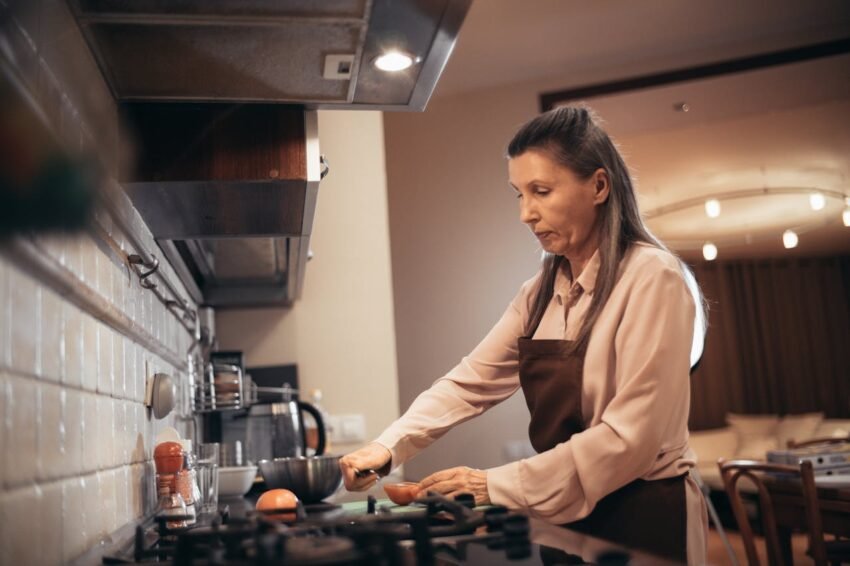

Cooking at home is usually defended with numbers. Groceries cost less than restaurant meals, and the comparison is easy to make. That explanation is convenient, but it rarely matches how people actually experience cooking in their daily lives. Many people continue to cook even when cost is not the deciding factor, returning to it after long days when energy is low and motivation is thin.
The persistence of home cooking reflects more than thrift. Everyday cooks know there is a craft to it, a set of decisions and habits that make meals feel easier and more satisfying over time. In a practical piece on everyday cooking, amateur chef and cooking show host Ryan McCorvie frames home cooking as something built through repetition and workable choices rather than technical perfection.
That perspective moves attention away from savings and toward what cooking does to the rhythm of the day. It influences how evenings begin, how decisions get closed out, and how attention moves away from work. These effects are subtle, partly because they repeat so often and partly because they do not announce themselves as benefits.
When cooking becomes routine rather than aspirational, its role changes. It stops being a project and starts functioning as infrastructure. That change helps explain why the habit tends to survive inconvenience. Cooking stays because it fits into daily life without asking to be justified.
Everyday Control, Not Optimization
Cooking at home offers a form of control that does not demand planning or discipline. Decisions can be made late, changed quickly, or scaled down without consequence. Dinner can happen earlier or later. Effort can rise or fall depending on what the moment allows. Nothing about the process insists on precision.
This control remains useful because it is incomplete. Meals do not need to be perfect, balanced, or memorable to count as finished. They only need to be sufficient. That low threshold keeps cooking from becoming another area where performance is measured.
Most days already come with enough fixed demands. Cooking offers a space where outcomes are not evaluated and progress is not tracked. There is no expectation of improvement and no lasting penalty for doing less than planned, which helps keep the habit intact when energy runs low.
Over time, this loose control builds comfort. Knowing that meals can be handled without much thought reduces background tension. Cooking works best when it stays ordinary. Once it turns into a goal or an identity, pressure returns, and the habit becomes fragile.
The Moment Cooking Interrupts the Day
Cooking interrupts the day whether it feels welcome or not. It arrives when attention is already spent and asks for engagement anyway. That interruption forces a decision that cannot be postponed indefinitely, even if the choice is minimal.
This pause creates a clear break between what came before and what follows. Work does not fade out gradually. It stops because something physical needs attention. The shift is enforced rather than chosen, which makes it more effective than intention alone. For many households, that interruption happens regularly. A consumer survey reported by Quality Assurance Magazine found that 81 percent of U.S. consumers cook more than half of their meals at home, meaning this daily pause is routine rather than occasional.
Cooking demands involvement. Hands are occupied, timing matters, and progress is visible. “Even a simple task pulls focus away from lingering thoughts about the day,” notes McCorvie. “That engagement brings attention back to the present without asking for reflection or effort.”
Some evenings, this interruption feels irritating. It can register as one more obligation layered onto an already full day. Still, it creates a boundary that few other activities provide. Over time, that repeated break becomes familiar and reliable, signaling that the day is changing shape.
Repetition, Boredom, and Getting Better Anyway
Home-cooking repetition is often seen as a lack of creativity, but it plays a subtle role in making the habit workable. Repetition lowers the cost of decision-making and reduces friction, which keeps cooking from competing with everything else that demands attention.
As tasks repeat, effort drops. Movements become automatic. Attention moves from figuring out what to make to simply making it. That familiarity is where confidence tends to form. As Ryan McCorvie puts it, “Being a competent home cook is not as difficult, nor as time-consuming, as it might first appear.” The point is not that cooking becomes exciting, but that it becomes manageable.
That pattern shows up broadly. A consumer survey published by Instacart found that 62 percent of Americans say they feel very or extremely confident in their cooking skills, suggesting that comfort in the kitchen comes less from variety than from familiarity built over time.
Boredom appears here, and it can be frustrating. Some nights the process feels pointless, especially when the result is unremarkable. But confidence grows through familiarity rather than achievement. This kind of learning does not feel productive, but it lasts because it does not rely on enthusiasm or momentum.
Ryan McCorvie: Time Spent, Time Noticed
“Cooking takes time, but that time feels different from waiting,” says McCorvie. “Active involvement changes how minutes register. When effort is required, time becomes visible rather than abstract, which is part of why cooking rarely feels interchangeable with more passive options.”
That experience is common. Time-use data from the U.S. Bureau of Labor Statistics shows that 57.2 percent of people in the United States spend time preparing food and drink on an average day, and those who do spend about 53 minutes on it.
Actions in the kitchen follow a sequence. Steps lead to progress, even when the outcome is modest. Something unfinished becomes finished, and that movement gives the time spent a clear shape.
This sense of progression carries into the rest of the evening. Time feels used rather than passed. Waiting often stretches because nothing changes while it happens, but cooking avoids that problem by demanding attention in exchange for progress.
Final Thoughts
Cooking at home does save money, but that is not why the habit lasts. It endures because it gives shape to the end of the day when structure is thin and decisions pile up. The practice supports agency in small ways. It absorbs attention, closes loose ends, and confirms that basic needs can be handled without ceremony. Over time, the kitchen becomes a place where the day is resolved rather than extended.
“The value of cooking at home lives in that repetition,” says McCorvie. “It is not optimized or impressive. It simply works, night after night, because it fits into life as it is.”