
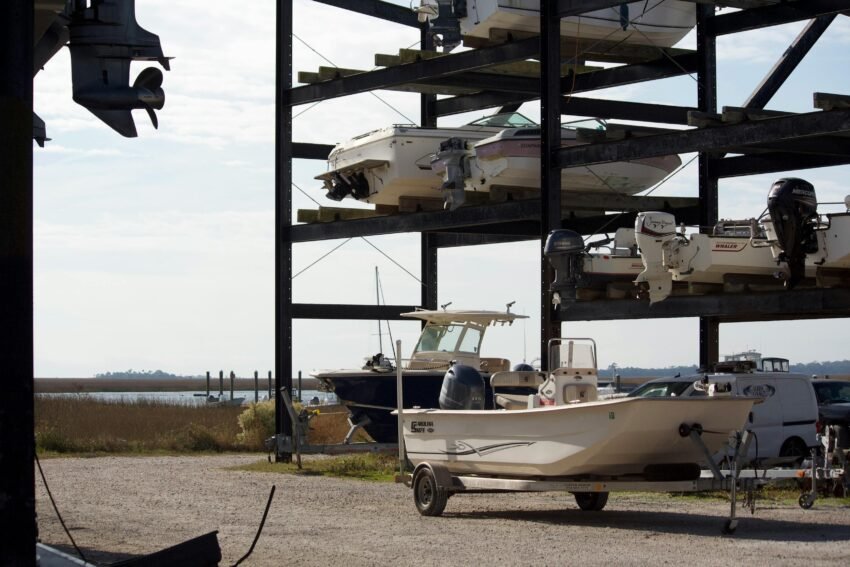

Owning a boat is an incredible luxury, but it also comes with a heavy maintenance burden. When the weather starts to turn and your weekend trips out on the lake or ocean become less frequent, you face a major decision. The easiest option is to simply tie off the dock lines, zip up the canvas cover, and leave your vessel sitting in its slip until next spring. However, choosing convenience over proper maintenance is a guaranteed way to drain your bank account.
Water is an incredibly corrosive, relentless environment. To truly protect your expensive asset, the smartest move is to pull it out of the marina and rent storage space on dry land. Storing your boat out of the water drastically extends its lifespan and preserves its resale value. Learn more about why leaving your boat submerged year-round is a massive structural and financial mistake.
The Threat of Osmotic Blistering
It is easy to assume that because a boat is built for the water, its exterior is entirely waterproof. This is actually a massive misconception. Most modern hulls are constructed from heavy fiberglass coated in a layer of protective gel coat. Over an extended period of continuous immersion, that gel coat is semi-permeable. Water molecules slowly force their way through the outer barrier and mix with the chemical resins inside the fiberglass layers.
This reaction creates acidic fluids that expand, causing ugly, destructive blisters to erupt all over the bottom of your hull. Repairing osmotic blistering is a total nightmare. It requires a professional boatyard to grind down the hull, let it dry out for months, and reapply expensive epoxy barrier coats. By keeping the hull completely dry for several months out of the year, you give the fiberglass a chance to breathe, completely avoiding this expensive structural disaster.
Battling the Marine Ecosystem
A stationary object sitting in the water quickly becomes a host for local marine life. Within just a few weeks of sitting idle, the underside of your vessel will start accumulating a thick layer of green slime. Soon after, barnacles, mussels, and aggressive algae will permanently attach themselves to your outdrive and hull.
This marine growth is not just an ugly cosmetic issue; it ruins the hydrodynamics of your vessel. A fouled hull creates massive physical drag in the water. Your engine has to work twice as hard to get the boat up on plane, your top speed drops significantly, and your fuel efficiency plummets. While toxic bottom paint helps deter growth, it wears off and requires constant scrubbing by professional divers. Pulling the boat out of the water starves the marine growth and keeps your hull slick, fast, and highly fuel-efficient.
The Silent Killer of Galvanic Corrosion
Marinas are heavily active electrical environments. Between the massive shore power pedestals, the underwater dock lighting, and dozens of other boats plugged into the grid, stray electrical currents constantly leak into the surrounding water. If your boat is sitting in this electrified soup year-round, you become a victim of galvanic corrosion.
This process occurs when different submerged metals interact through the conductive water, causing the weaker metals to literally dissolve. Your expensive propellers, heavy metal shafts, and vital thru-hull fittings will slowly be eaten away. While you can attach sacrificial zinc anodes to absorb this damage, they deplete incredibly fast when a boat is permanently kept in a wet slip. Taking the boat out of the water completely removes the electrical connection, protecting your expensive metal running gear from quietly dissolving into the ocean.
Winter Weather and Freezing Hazards
If you live in a region that experiences harsh winters, leaving your boat in the water is a massive gamble. When temperatures drop below freezing, the water surrounding your boat turns to ice. Ice is incredibly strong and expands rapidly as it freezes. If a thick layer of solid ice forms around your waterline, the outward pressure can actually crush the fiberglass hull right open.
Even if the marina uses agitators to keep the water moving and prevent surface ice, you still have to worry about the internal systems. If a sudden deep freeze hits and you have any residual water sitting in your engine block, your raw water washdown pumps, or your internal plumbing lines, those components will shatter. Moving the boat to dry land allows you to properly winterize and drain every single drop of water from the internal mechanics, ensuring you do not start the spring season with a cracked engine block.
Avoiding the Wrath of Storms
Even if you live in a warm, tropical climate that never sees a snowflake, wet storage leaves your vessel entirely exposed to severe weather. Tropical storms, heavy squalls, and aggressive storm surges turn a peaceful marina into a highly violent environment.
When high winds whip through a dock, your boat is constantly yanked against its mooring lines. Fenders easily slip out of place, causing your pristine gel coat to grind violently against the rough wooden dock pilings. In severe storm surges, boats can even be lifted entirely above the pilings and dropped directly onto the docks. By moving your vessel to a secure, dry lot or an indoor facility, you completely remove the threat of shifting tides, rogue waves, and brutal dock rash.
Protecting Your Resale Value
Buying a boat is a massive financial investment, and eventually, you will likely want to sell it to upgrade to a newer model. When a prospective buyer or a marine surveyor inspects your vessel, the very first thing they look at is the condition of the hull and the outdrives. A boat that has spent its entire life sitting in a wet slip shows obvious, undeniable signs of heavy wear, pitting, and sun bleaching. A boat that has been meticulously stored on dry land looks pristine, well-maintained, and mechanically sound. Taking the time to pull your boat out of the water ensures you command top dollar when it is finally time to hand over the keys to the next owner.