
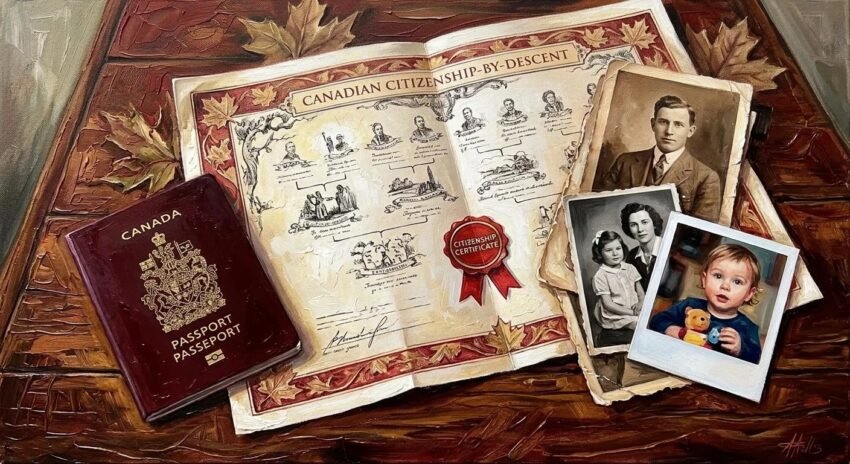

Canada’s revised citizenship-by-descent legislation is prompting American families with Canadian ancestry to examine nationality rights across several generations, as separate requirements for parents, adult children, adopted relatives, and future descendants make individualized eligibility assessments essential for long-term international mobility planning.
WASHINGTON, DC, November 6, 2026 — Canada’s expanded citizenship-by-descent framework is changing how internationally connected families investigate their nationality, with parents, adult children, and future descendants potentially facing different legal requirements despite sharing the same Canadian ancestry.
Following reforms effective December 15, 2025, certain individuals previously excluded from citizenship recognition may now qualify automatically, while children born abroad afterward may face additional requirements tied to their Canadian parent’s historical physical presence.
For American families considering second passports, the legislation raises questions extending beyond individual eligibility, particularly when several generations intend to preserve future residence, employment, educational, and family reunification opportunities in Canada.
Canadian Citizenship Reform Changes Family Planning Assumptions
Canada’s Bill C-3 received royal assent on November 20, 2025, and entered into force on December 15, 2025, changing the first-generation restriction that previously limited citizenship transmission to many children born outside Canada.
Under the former framework, Canadian citizens who acquired nationality through descent abroad generally could not automatically transmit citizenship to another generation born overseas, even when the family maintained meaningful personal and historical connections.
The revised legislation recognizes certain previously excluded descendants while establishing a substantial connection requirement for qualifying future births and adoptions, creating different legal outcomes depending on individual family circumstances.
American Interest Reflects Growing Multigenerational Demand
A May 30, 2026, Reuters report examining growing American interest in Canadian citizenship by descent described rising recognition activity following the legislative reforms, highlighting increased attention among descendants with family connections across the border.
According to immigration agency figures reported by Reuters, approvals under the expanded framework reached 1,140 in January, 1,255 in February, and 1,405 in March, demonstrating substantial activity during the initial implementation period.
The reporting also indicated that approximately 48 percent of additional approvals through February originated from the United States, although those figures do not establish that every American with Canadian ancestry qualifies.
Parents and Adult Children May Have Different Eligibility
An American parent born before December 15, 2025, may qualify for Canadian citizenship through the retrospective provisions, even when earlier legislation prevented recognition because the family had already established several generations abroad.
That parent’s adult children may also qualify under the expanded framework if their relevant births occurred before the effective date and the family relationships satisfy the applicable Canadian nationality provisions.
However, the eligibility of one relative does not automatically resolve every other family member’s position, particularly where individuals were born at different times or their legally recognized parental relationships differ.
Earlier Births Benefit From Retrospective Citizenship Recognition
For qualifying individuals born abroad before December 15, 2025, the amended legislation may automatically establish citizenship where the previous first-generation limit or certain historical nationality rules otherwise prevented recognition of Canadian status.
An American born in 1985 to a Canadian parent who was also born abroad may therefore possess citizenship under the revised provisions, even if earlier government guidance suggested that the family connection was insufficient.
Applicants must still establish the relevant parental citizenship and legally recognized family relationships, because the reforms do not automatically grant nationality to everyone who discovers a distant Canadian ancestor.
Future Children Face a Different Citizenship Requirement
For certain children born outside Canada on or after December 15, 2025, citizenship transmission depends on whether their Canadian parent, also born or adopted abroad, accumulated sufficient physical presence in Canada beforehand.
The qualifying parent generally must demonstrate at least 1,095 cumulative days physically spent in Canada before the child’s birth, establishing a substantial connection that cannot be replaced merely by possessing Canadian citizenship documents.
This distinction creates significant planning considerations for families expecting children overseas, particularly when parents obtained Canadian citizenship through descent but have spent little or no time residing within Canada.
The 1,095-Day Requirement Changes Future Family Decisions
The substantial connection requirement is approximately three years of physical presence, although qualifying days can be accumulated across separate periods rather than forming one continuous period immediately before the child’s birth.
A Canadian citizen born in the United States who subsequently attended university in Ontario and worked in British Columbia may possess records supporting the required total before having children abroad.
Conversely, a parent who has always lived outside Canada may not satisfy the prospective transmission requirement, even when several earlier generations possessed Canadian citizenship and the family retains strong cultural connections.
Grandparents Remain Important to Establishing Citizenship
A Canadian-born grandparent can provide a crucial historical connection when American descendants investigate whether nationality passed through an intervening parent and whether the amended legislation now recognizes subsequent generations.
Applicants may need the grandparent’s provincial birth certificate, the parent’s official birth documentation, and their own records establishing the legally recognized relationships necessary for citizenship transmission.
However, an eligible grandparent does not automatically satisfy the physical presence requirement applicable to certain future births, because that condition concerns the Canadian parent through whom nationality would pass.
Future Generations Cannot Assume Unlimited Citizenship Transmission
The reforms expand recognition for many descendants previously restricted by the first-generation limit, but they do not establish that citizenship automatically passes indefinitely through every generation born outside Canada.
A newly recognized Canadian citizen who never lived in Canada may have full nationality rights but lack the physical presence required to automatically transmit citizenship to a future child born abroad.
Families should therefore distinguish citizenship already acquired by existing relatives from the separate rules governing children born afterward, particularly when long-term family planning involves several countries.
Adopted Children Require Individual Legal Assessment
Canada’s amended framework also addresses certain individuals adopted abroad by Canadian parents, but adoption-related citizenship generally involves a direct grant procedure rather than automatic acquisition through ordinary birth-based descent.
For qualifying adoptions on or after December 15, 2025, the Canadian parent’s substantial connection may matter if that parent was also born or adopted outside Canada.
Families must examine adoption judgments, parental nationality, and the timing of the adoption, ensuring that every child’s circumstances are evaluated under the applicable legal pathway rather than generalized family assumptions.
Marriage Does Not Automatically Confer Canadian Citizenship
A spouse does not automatically become Canadian simply because their husband or wife obtains citizenship through descent, making marital relationships a separate consideration within broader international family planning.
The noncitizen spouse may qualify for sponsorship or another immigration pathway under applicable Canadian law, but residence authorization and eventual naturalization involve distinct statutory requirements and government procedures.
Families considering relocation should assess both spouses’ immigration status before making permanent housing, employment, or financial commitments based on one partner’s newly recognized nationality.
Historical Family Records Establish the Documentary Foundation
Canadian citizenship applications frequently depend on official birth certificates, marriage records, citizenship documents, and other evidence establishing the relationships through which nationality allegedly passed between earlier generations.
An American whose grandmother was born in Manitoba may need documents connecting that ancestor to the intervening parent and the current applicant, especially when several generations lived outside Canada.
When surnames changed through marriage, adoption, or authorized legal procedures, additional documentation may be needed to establish continuity and resolve inconsistencies that affect the government’s evaluation of the claim.
Residence Evidence Matters for Future Births
Families whose citizenship planning involves future children may need historical records documenting a Canadian parent’s actual physical presence, particularly where qualifying periods occurred during education or employment many years earlier.
School transcripts, employment records, travel information, and other reliable materials may support the required residence calculation, although Canadian authorities determine whether the submitted evidence sufficiently establishes 1,095 qualifying days.
Applicants should distinguish actual physical presence from maintaining Canadian property, citizenship documents, or family relationships, because those connections do not independently establish the days required under the prospective nationality framework.
Citizenship Certificates Come Before Passport Applications
Individuals who automatically acquired Canadian citizenship through the December 2025 reforms may need an official citizenship certificate to document their legal status before applying for Canadian passports.
The citizenship certificate establishes nationality, while the passport is a separate government-issued identification and travel document that requires compliance with applicable application and identity verification procedures.
Parents and adult children should therefore determine whether each person already possesses citizenship before submitting passport applications, especially when family members qualify through different provisions or have incomplete records.
Dual Citizenship Creates Separate Legal Responsibilities
Americans who acquire Canadian citizenship through descent generally retain U.S. nationality unless a separate legally effective event causes its loss, creating rights and responsibilities under both legal systems.
The U.S. Department of State’s official guidance on dual nationality explains that American dual nationals must enter and depart the United States using valid American passports, including children who possess another nationality.
Additional Canadian citizenship can provide residence and employment opportunities, but it does not automatically eliminate U.S. tax obligations, financial reporting responsibilities, or other legal requirements associated with U.S. nationality.
Canadian Citizenship Can Support Education and Employment
Canadian citizenship can provide important opportunities for eligible family members seeking permanent residence and lawful employment, particularly when adult children anticipate international career changes or university studies.
However, provincial healthcare coverage, tuition classifications, professional licensing, and certain public benefits may have additional requirements separate from nationality recognition and depend on individual circumstances.
Families should therefore examine the practical benefits available to each relative rather than assuming that citizenship immediately guarantees access to every educational, professional, or publicly funded service.
Electronic Passports Cannot Establish Ancestral Eligibility
Modern Canadian passports include electronic security features designed to support inspection systems in verifying identity information and evaluating the cryptographic protections associated with official travel documents.
Amicus International Consulting explains these functions in its guide on scanning a passport’s NFC chip and understanding the results, distinguishing electronic authentication from broader legal determinations about citizenship and nationality transmission.
A successful NFC authentication may support confidence in stored passport information, but it cannot independently establish parental citizenship, historical family relationships, or the physical presence required for certain future births.
Family Planning Requires More Than a Shared Ancestral Connection
A family may include grandparents born in Canada, parents born in the United States, adult children living internationally, and future descendants whose citizenship rights depend on different statutory provisions.
These circumstances make individualized assessment essential, particularly when one relative qualifies under retrospective recognition while another must establish parental physical presence or complete a separate adoption-related citizenship procedure.
Professional genealogical and legal assistance can help clarify complex family histories, but only the responsible government authorities can determine whether the applicable legislation recognizes each individual’s nationality.
Long-Term Mobility Planning Depends on Accurate Legal Status
Families considering Canadian citizenship should begin by identifying the relevant generations, establishing parental nationality, and determining which legal provisions apply to each birth or adoption.
A structured investigation can distinguish individuals who already have Canadian citizenship from those who need additional evidence or separate applications, helping relatives understand their options before making major relocation commitments.
The resulting information may support future education, employment, residence, and family reunification planning, while avoiding unrealistic assumptions that an approved citizenship claim automatically resolves every relative’s immigration circumstances.
Canadian Ancestry Is Now a Multigenerational Planning Question
Canada’s revised citizenship legislation shows how nationality rights can differ within a single extended family, particularly when birth timing and Canadian parents’ historical residence determine legal eligibility.
For Americans investigating ancestral citizenship, the practical challenge involves coordinating authentic family records with current nationality rules while recognizing that parents, adult children, and future descendants may occupy different legal positions.
Ultimately, Canadian ancestry searches have become a family planning issue because citizenship recognition does not produce a universal answer for every relative, and each generation must meet the legal requirements of its particular circumstances.
