
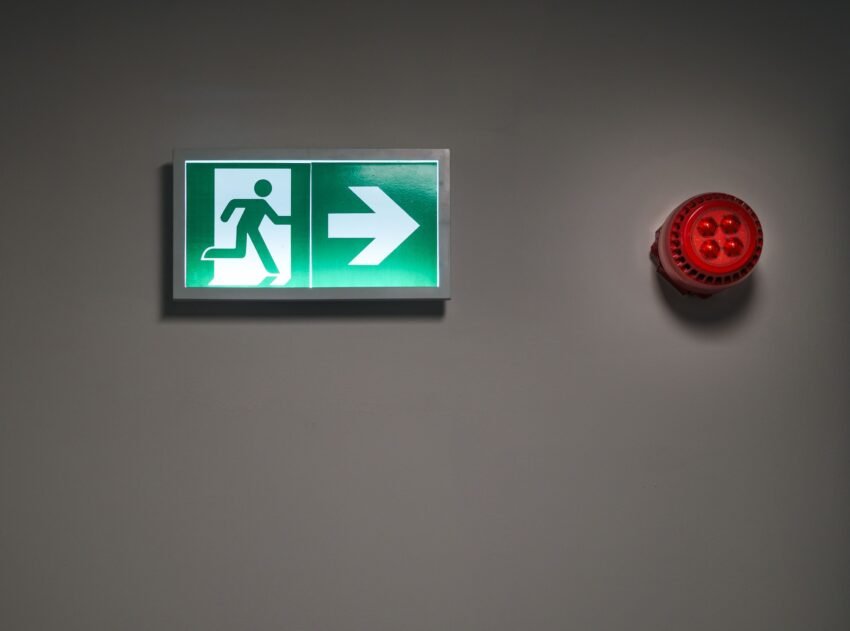

We spend most of our lives inside buildings. We trust that the roof will stay up and the floors will hold our weight. Most of the time, that trust is well-placed, but buildings are physical structures subjected to gravity, weather, and time. When they start to fail, the results are catastrophic. Recognizing the difference between a routine maintenance issue and a life-threatening emergency can save lives.
If a property owner or manager notices severe warning signs, the priority instantly shifts from fixing the problem to getting everyone out safely. In these critical moments, you need to clear the area and immediately call a qualified engineering firm to assess the danger. You can always fix a building later, but you can’t undo a collapse. Here are the critical structural red flags that mean a building needs to be evacuated right now.
Sudden and Severe Foundation Movement
A little bit of settling is normal for any structure. You might notice a hairline crack in the drywall or a floorboard that squeaks. But sudden, drastic shifts in a building’s foundation indicate an active failure. If wide, jagged cracks suddenly appear in the brickwork or concrete blocks, the ground underneath is giving way rapidly.
Another glaring warning sign is when multiple doors and windows suddenly jam and refuse to open or close. When a foundation drops unevenly, it twists the framing of the entire building. This twisting jams the doors in their frames. If a building shifts so drastically in a matter of hours or days that doors are wedged shut and large cracks are tearing through the walls, the structural integrity is compromised. Everyone needs to leave until an expert verifies the soil and foundation are stable.
Bowing and Buckling Load-Bearing Walls
Load-bearing walls carry the weight of the roof and upper floors down to the foundation. They’re the legs of the building, and they’re designed to stand perfectly straight to transfer that weight effectively. If you look at a primary support wall and notice it’s bowing outward or buckling inward, the structure is actively losing its ability to hold itself up.
This often happens if an interior renovation accidentally removed a crucial support, or if water damage has compromised the wall’s internal materials. Once a load-bearing wall begins to curve under pressure, a complete collapse is highly probable. The materials have already pushed past their limits. There’s no time to wait and see if the bowing stops; the building must be cleared immediately.
Sagging Roof Lines and Ceilings
The roof protects the interior, but it also weighs a tremendous amount. When the trusses or beams holding that roof up begin to fail, the ceiling below will start to sag noticeably. If you look up and see a significant dip in the ceiling, especially if it’s accompanied by a new, deep crack running across the plaster or drywall, the framing above is giving way.
This is particularly dangerous in regions that receive a lot of snow, where the extra weight can push an aging roof past its breaking point. However, it also happens due to hidden water rot or termite damage. A sagging roof line viewed from the outside is just as alarming. If the ridge of the roof looks like a swayback horse, the structural supports are failing and the interior is no longer safe for occupation.
Spalling Concrete on Primary Columns
We see this issue frequently in parking garages and concrete high-rises. Concrete is incredibly strong, but it relies on internal steel rebar for tension support. If water penetrates the concrete, it causes the steel inside to rust and expand. This expansion forces chunks of the concrete to blast off the surface, a process known as spalling.
If a primary support column in a basement or garage is shedding large chunks of concrete and exposing rusted, flaking steel, that column is losing its load-carrying capacity. If multiple columns are showing this level of severe decay, the entire structure above is at risk of a pancake collapse. You shouldn’t walk near these failing columns, and you certainly shouldn’t park or live above them. Evacuation is the only safe choice until emergency shoring is installed.
Unexplained Snapping and Popping Sounds
Buildings usually make a few noises as they heat up in the sun or cool down at night. But the sound of a building actively failing is entirely different. If you hear loud, echoing pops, snapping wood, or the distinct groaning of twisting metal, the building’s skeleton is crying out for help.
These sounds mean that immense pressure is snapping fasteners, shearing off bolts, and splintering wooden beams. If a building is talking to you with sharp, violent cracking noises, you need to listen to it and get out. These auditory clues often precede a visual failure by just a few minutes or hours.
Putting Life Safety First
Knowing when to walk away from a failing building is a matter of life and death. Property managers and occupants often hesitate to sound the alarm because evacuating is inconvenient. They worry about disrupting business, inconveniencing residents, or causing an unnecessary panic, but the inconvenience of standing out on the sidewalk is nothing compared to the tragic consequences of ignoring a structural failure.
If a building shows these severe warning signs, you have to prioritize human safety above all else. Don’t wait for things to settle down or try to brace a failing wall yourself. Clear the premises, secure the perimeter to ensure nobody wanders back inside, and let the professionals determine if it’s safe to return.