
By Kevin Price.
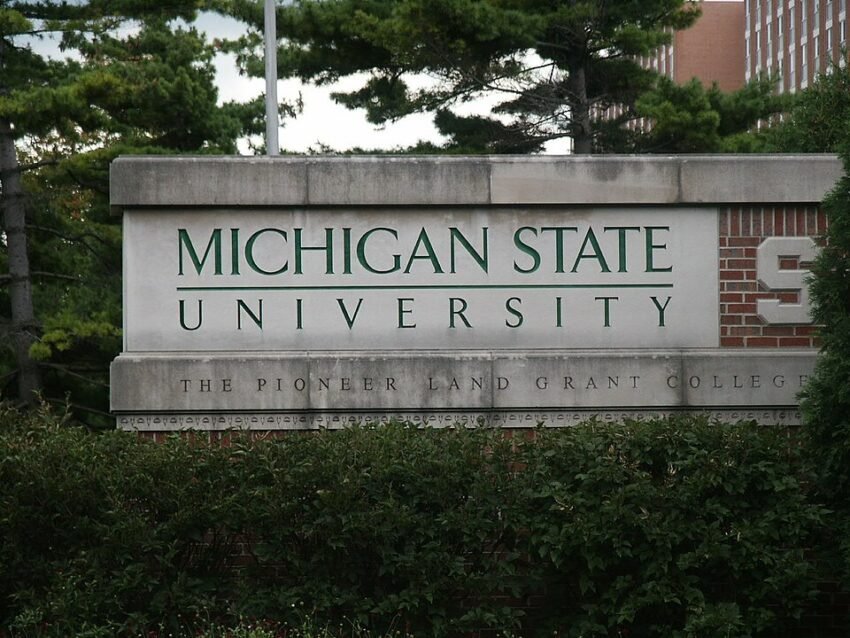
The unexpected departure of Kevin Guskiewicz from the presidency of Michigan State University to accept a significantly lower salary at Clemson University stunned higher education. To the casual observer, it was a financial paradox: a sitting president walking away from a unanimous $2 million emergency retention raise to take a $1.2 million base salary elsewhere. Yet, to anyone tracking the structural decay of public university governance, the move was entirely logical. Guskiewicz’s exit, and the parallel crises engulfing the University of Michigan and Wayne State University, expose a systemic design flaw unique to the state: the statewide election of university trustees. When university governors answer to partisan political demands rather than to a fiduciary responsibility to the school, the institution becomes unmanageable.
To understand why top-tier administrators are escaping from these types of environments, one must first dismantle the modern presidential profile. Traditional routes to university leadership—built on deep academic pedigrees in law, economics, or classical humanities—have increasingly given way to leaders leveraged by timing, external accolades, and fundraising prowess. Guskiewicz’s background is a case study in this shift. With modest roots in clinical athletic training from West Chester University, his trajectory was accelerated by a national public health crisis. His pioneering research in sports-related concussions arrived precisely when the NCAA and NFL faced intense legal and regulatory scrutiny.
This hyper-specialized scientific prestige, capped by a MacArthur Fellowship, granted him a level of national validation that functioned as institutional currency. For large public R1 research universities facing declining state funding, a president with a proven track record of securing multi-billion-dollar campaigns and navigating intense media environments is highly attractive. However, when an elite administrator enters an institution where the governing board is fundamentally broken, no amount of executive leadership—or financial compensation—can override structural instability.
The crisis across Michigan’s “Big Three” public universities stems directly from their constitutional design. Michigan is highly unusual in requiring that trustees and regents for MSU, UM, and Wayne State be nominated at partisan state political party conventions and elected on a statewide general ballot. In my opinion, this is probably the worst model of governance among those considered by states and schools. This elective model introduces a toxic operational dynamic. Because these trustees must answer to a highly polarized political base to maintain their positions, they routinely prioritize external ideological agendas over internal (institution focused) stewardship. The boardroom ceases to be a place of quiet fiduciary oversight and transforms into a proxy battlefield for national cultural wedge issues.
At the University of Michigan, this partisan fracturing has manifested in public warfare among regents, public battles over athletic private equity investments, and personal security crises that have spilled onto the private property of board members. The institutional chasm was further laid bare by the collapse of their recent presidential transition; after successfully recruiting Syracuse Chancellor Kent Syverud, a sudden medical diagnosis forced him to step aside, plunging an already divided board back into an unstable interim search cycle. Similarly, Wayne State University has quietly suffered rapid executive turnover, culminating in the forced resignation of its first female president after just two years, accompanied by a costly three-quarter-million-dollar buyout. This continuous loop of forced exits, administrative gridlock, and emergency financial panic proves that the system itself is an unmitigated failure.
This chaotic reality stands in stark contrast to the governance model found in smaller, mission-driven private institutions. Private, self-perpetuating boards are composed of individuals with an intense, inward-facing interest: dedicated alumni, parents of students, and major benefactors. When the trustees at institutions like this clash, the friction is constructive, focused entirely on protecting the quality of the degree, preserving campus culture, and maximizing the university’s internal return on investment. They possess skin in the game. Their personal reputations are inextricably tied to the health of the school.
In Michigan, however, the “unique interest” of elected trustees is entirely external. Because they do not need an authentic connection to the school to get on the ballot, they can treat a university board seat as a personal media platform or a political stepping stone. If the university’s academic brand degrades under their tenure, their personal standing among their partisan voting base remains largely untouched—or is even enhanced by the public conflict. The vast majority of those that vote on the future of Michigan’s premier institutes of higher learning have no connection to it. It is a bizarre way to establish governance and its track record is shockingly bad.
Fixing this structural flaw requires a pragmatic, real-world compromise between total isolation and political manipulation. While a bipartisan constitutional amendment has been proposed in the Michigan Legislature to shift the Big Three to a standard gubernatorial appointment model, that solution only rates a “B-,” at best, in my opinion, because it lacks strict eligibility guardrails. I believe that a truly resilient governance model must enforce a strict statutory floor: a mandatory “two-out-of-three” eligibility matrix for all potential trustees, based on the best practices in higher education today.
Under this framework, no individual may join a university board unless they satisfy at least two distinct pillars: a direct institutional connection (such as being an alumnus or a parent of a student), proven professional executive acumen (managing a complex enterprise or a massive budget), or established civic leadership.
Mandating that every trustee possess a personal, historical stake in the university changes the entire executive landscape. It completely eliminates the rogue political activist who has no relationship to the campus. More importantly, it creates a powerful incentive for the board to recruit the absolute best outside administrative talent available, regardless of whether that candidate has a historic connection to the school. Because the board itself acts as the permanent guardian of the university’s core identity, they can confidently grant an external disruptor the operational autonomy needed to lead, knowing the school’s culture is securely anchored at the governance level. To survive and maximize board relations, that outside president is naturally incentivized to completely immerse themselves in the campus culture.
Higher education cannot thrive when its leadership positions are treated as career graveyards by top-tier academics. Until public universities insulate their governing boards from the whims of the political mob and demand that trustees hold a genuine, personal stake in the institutions they oversee, the executive nightmare will continue. Genuine governance requires trustees who are uniquely interested in the advancement of the school itself, rather than using the school to advance themselves.
Kevin Price is Host of the nationally syndicated Price of Business show, the author of several books in several fields including public policy, intellectual history, economics. philosophy, theology, and much more. A public intellectual, he has spoken coast to coast and around the world. Editor at Large for The Times USA. Follow him at Twitter (X) @kevinpricelive.