
What this covers
|
Dehydration is the most common reason people look for intravenous fluids, and it is also the condition where the evidence most clearly favors a simpler answer for most cases.
That is an awkward thing for the infusion industry to say and it happens to be true. Worth setting out properly, because the useful question is not whether fluids help but which route makes sense for a given situation.
Why Oral Rehydration Beats Plain Water
The single most useful piece of physiology in this topic, and most people have never encountered it.
Oral rehydration solution combines glucose and sodium in water, and the combination is not incidental. Sodium-glucose cotransport moves water across the intestinal wall, which means sodium and glucose together pull water into the body far more effectively than water alone does.
This is the mechanism behind oral rehydration therapy, one of the more significant public health interventions of the last century. It works well enough that it is the first-line treatment for dehydration from gastrointestinal illness worldwide, including in cases that were previously fatal.
The practical implication for an ordinary person is that drinking plain water when meaningfully dehydrated is less effective than drinking something containing both sodium and a small amount of sugar. Sports drinks approximate this, though many are formulated more for palatability than for rehydration. Purpose-made rehydration solutions get the ratio right.
Thirst Is Not a Good Signal
Thirst is a delayed indicator of fluid loss, which is why relying on it is unreliable.
The sensation appears after fluid loss has already begun to affect blood concentration. By the time somebody feels notably thirsty, they are already behind, and in older adults the signal is blunted further, which is one reason dehydration is a more serious issue in that group.
The practical version is that during illness, heat exposure or prolonged exertion, drinking on a schedule works better than drinking on demand. That is unglamorous advice and it prevents most of the situations that end with somebody looking for an infusion.
What Actually Gets Assessed
A clinician looking at a dehydrated person is not guessing, and it is worth knowing what they look at.
Skin turgor is a clinical sign assessed on examination, along with mucous membranes, heart rate, blood pressure including changes on standing, capillary refill, and urine output and concentration. Weight change against a known baseline is among the more accurate measures where a baseline exists.
Electrolyte imbalance is identified by blood testing, and this is where a setting that can order labs differs from one that cannot. Dehydration is not only a volume problem. Sodium and potassium disturbances accompany it, they matter clinically, and correcting volume without knowing the electrolyte picture is working with incomplete information.
In mild cases none of that is necessary. In cases severe enough to be considering intravenous fluids, it starts to matter.
Where the Oral Route Genuinely Fails
Being specific about this is more useful than a general claim either way.
Persistent vomiting. The clearest indication. Somebody unable to keep fluids down cannot rehydrate orally, and this is the most common legitimate reason for the intravenous route.
Severe or ongoing diarrheal losses outpacing what can be taken in.
Impaired consciousness or inability to swallow safely. An emergency presentation rather than a clinic one.
Significant volume depletion, where the deficit is large enough that oral replacement would take impractically long.
Specific medical conditions where fluid and electrolyte balance is already precarious, assessed individually.
| Situation | Reasonable first approach |
|---|---|
| Mild dehydration, feeling unwell | Oral rehydration solution |
| Exercise or heat-related, still drinking | Oral, with sodium |
| Hangover | Oral, and time |
| Unable to keep fluids down | Clinical assessment, likely IV |
| Ongoing losses outpacing intake | Clinical assessment |
| Confusion, fainting, very rapid heart rate | Emergency department, not a clinic |
| Infant or older adult, unwell and not drinking | Urgent medical assessment |
| Chest pain, severe abdominal pain, high fever | Emergency department |
The bottom three rows are the important ones and they point away from any elective infusion setting. Anyone in those categories needs an emergency department, and an infusion appointment is a delay rather than a treatment.
What Intravenous Fluids Actually Do
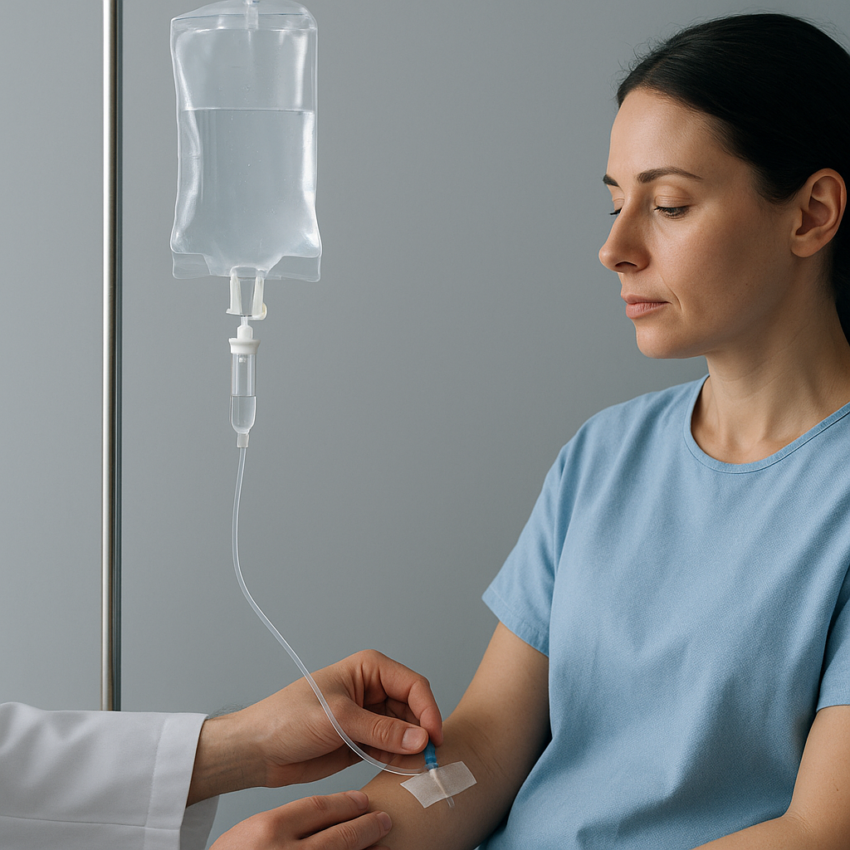
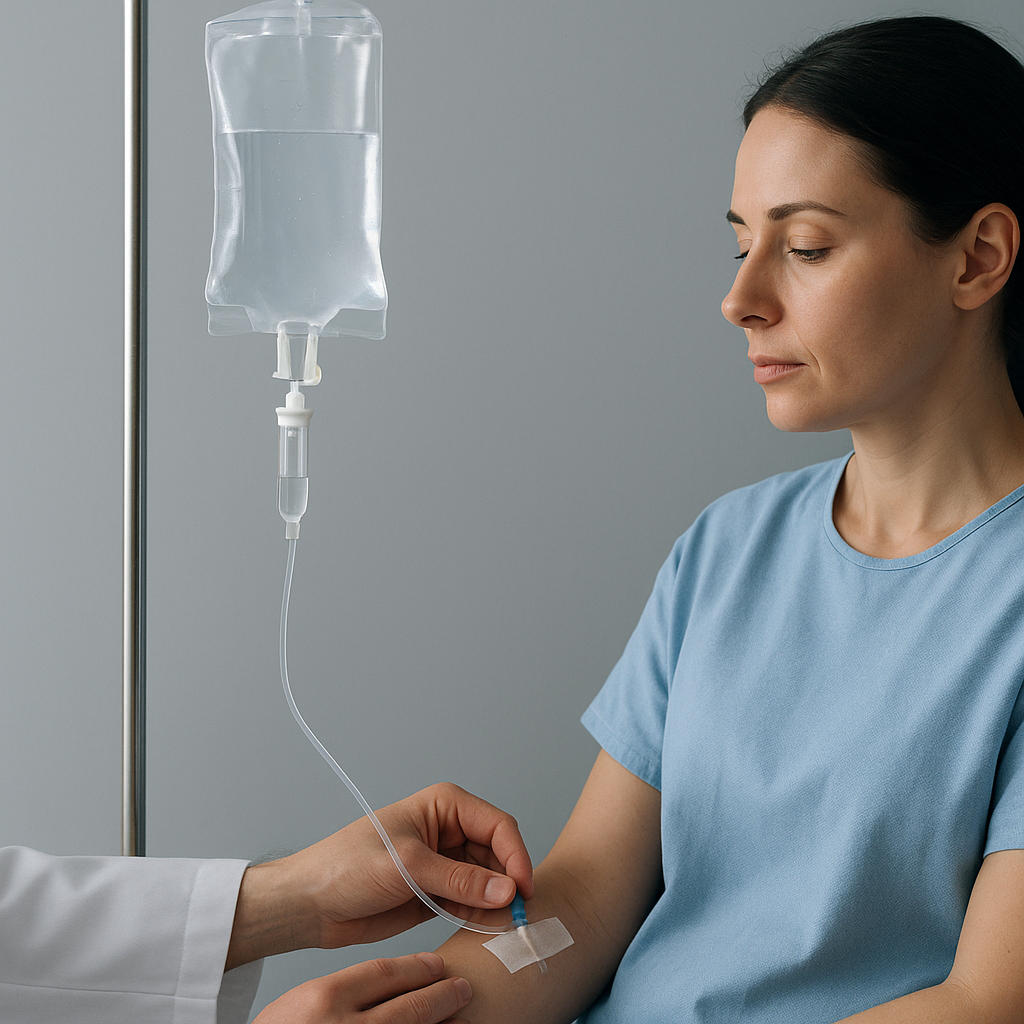
Intravenous fluid bypasses the gastrointestinal tract, delivering volume directly into circulation. For someone who genuinely cannot absorb orally, that is the entire value and it is substantial.
What it does not do is work better than oral rehydration in someone whose gut is functioning. Studies comparing the routes in mild to moderate dehydration have generally found oral rehydration at least as effective, cheaper, and without the small risks that accompany any invasive procedure.
The subjective experience is a separate question and worth acknowledging honestly. People frequently report feeling better quickly after an infusion, and part of that is real volume replacement while part is likely rest, attention and expectation. Neither of those is nothing, and neither is a clinical argument for choosing the route.
The Honest Position
Which produces a straightforward summary that not everyone in this field will state.
For most dehydration in most people, drinking an appropriate solution is the better answer. It is cheaper, at least as effective, and carries no procedural risk.
For the specific situations where the gut is not available, intravenous fluid is the correct intervention and there is no substitute.
Distinguishing between those two is a clinical assessment, not a self-assessment, which is the argument for starting with somebody who can make it. A setting willing to say drink this and rest is more trustworthy than one where every visit concludes with an infusion, and an IV therapy clinic in Springfield that also provides primary care has no structural reason to reach the second conclusion. Their Google Business Profile reflects a practice where the infusion room is one option among many.
What Counts as an Appropriate Oral Solution
Since the recommendation above rests on it, worth being concrete about what actually qualifies.
The functional requirement is sodium and a modest amount of glucose in water, in a ratio that supports cotransport rather than one optimized for taste. Too much sugar works against the goal, since a strongly sugary drink draws water into the intestine rather than out of it.
| Option | How it performs |
|---|---|
| Purpose-made oral rehydration solution | Formulated for the ratio, performs best |
| Electrolyte powders and tablets | Varies widely, read the sodium content |
| Standard sports drinks | Usable, generally lower sodium and higher sugar than ideal |
| Broth or salted soup | Genuinely effective, and easy to tolerate |
| Coconut water | Reasonable potassium, low on sodium |
| Plain water | Fine for mild losses, insufficient alone for significant ones |
| Soda or fruit juice | Sugar content works against absorption |
| Caffeinated or alcoholic drinks | Not part of a rehydration plan |
Two rows are worth reading in the surprising direction. Broth outperforms most of what people reach for, largely because the sodium content is high and it is easy to keep down when nauseated. And plain water is not wrong, it is simply not sufficient by itself when losses have been meaningful, because replacing water without replacing sodium can leave the balance no better.
Sipping steadily beats drinking in volume, particularly with nausea present. Small amounts frequently is the approach that actually stays down.
What to Do Practically
For ordinary dehydration, the sequence is short and boring.
Use an oral rehydration solution rather than plain water. Sip steadily rather than drinking large volumes at once, particularly if nausea is present. Rest. Keep going for longer than feels necessary, since replacement takes longer than depletion did.
Escalate if fluids will not stay down, if losses are outpacing intake over several hours, or if anything on the emergency list appears.
And for anyone in an at-risk group, particularly older adults and small children, lower the threshold for seeking assessment considerably. Those are the groups where dehydration progresses faster and is tolerated worse.
The Local Piece
Springfield is in Greene County, Missouri, and summer here produces a genuine seasonal pattern.
Heat and humidity combine to increase fluid and electrolyte losses substantially during outdoor work or exercise, and the humidity matters because it reduces the efficiency of sweat evaporation. Losses run higher than the same activity would produce in a drier climate.
The practical local advice is unremarkable: replace sodium as well as water during summer outdoor activity, start before feeling thirsty, and treat a hot day the way an athlete treats a training session rather than the way a spectator treats an afternoon.
The Short Version
Oral rehydration solution beats plain water, because sodium and glucose together pull water across the intestinal wall in a way water alone cannot.
Thirst arrives late. Drinking on a schedule during illness, heat or exertion prevents most of the problem.
Intravenous fluid is the right answer when the gut is unavailable, principally persistent vomiting. In mild to moderate dehydration with a working gut, the oral route performs at least as well.
Confusion, fainting, chest pain or a very unwell child or older adult means an emergency department, not an infusion appointment.